Field service scheduling

Car detailing software for bays and mobile work

  • Car wash booking system by bay, person and duration
  • Three constraints, one confirmation
  • Multi-day work occupies the days it needs

No card asked for · nothing taken from a booking · your data exports

Operating model
Field service scheduling
What is booked
Service → Address → Team
Getting started
Bays, detailers and packages to enter first

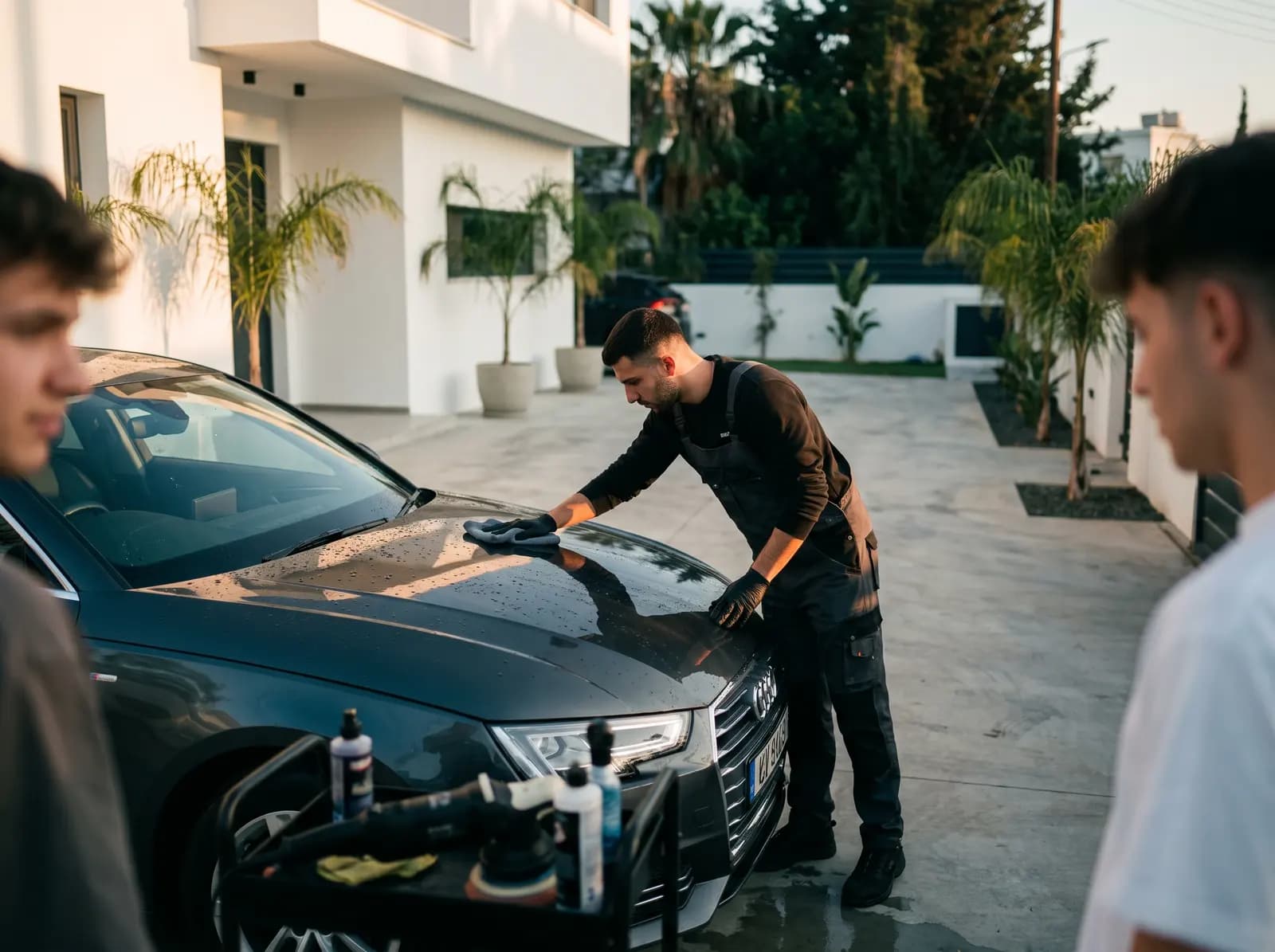
Detailing prices are honest only after somebody has looked at the car. A machine polish on a dark car with swirl marks is not the two-hour job the website advertises, and a ceramic coating is not a booking at all — it is the car staying two days. Base books the bay and the detailer together, lets the price start as a package and become a quote once the car is in front of you, and treats a mobile visit as what it is: a job with travel on both ends and no compressor at the other end unless you brought one.

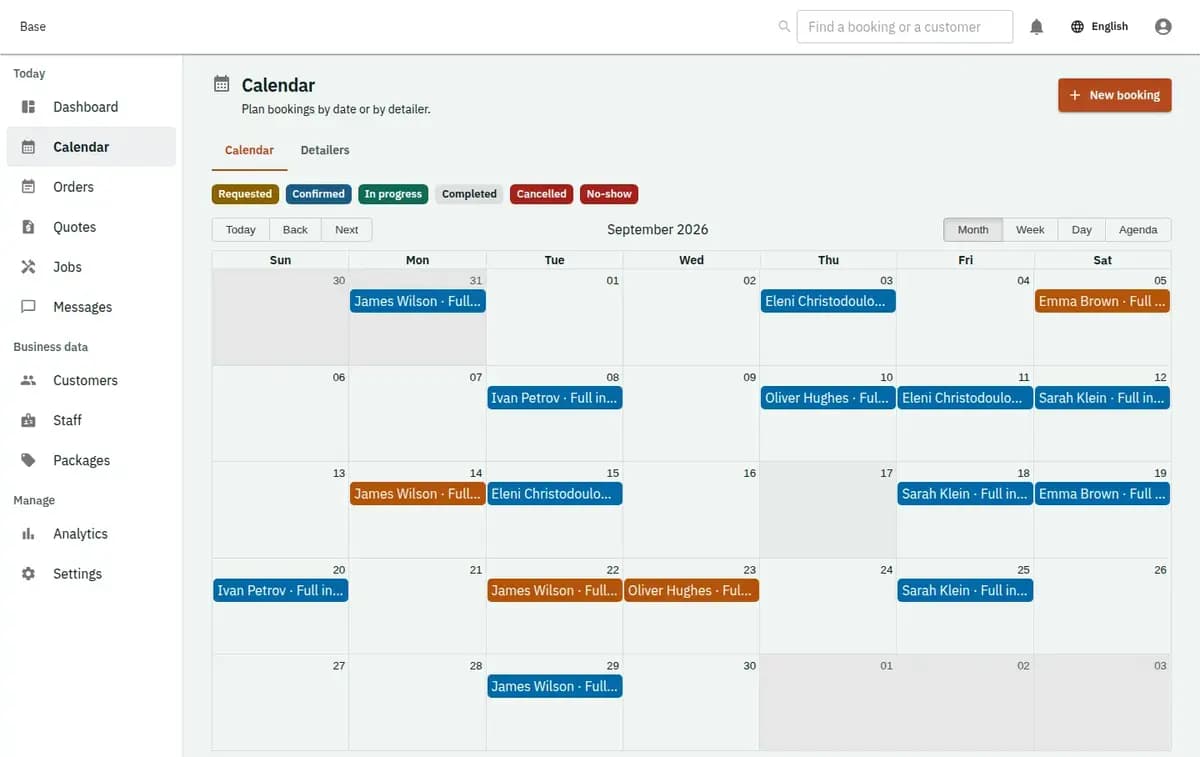
Base calendar showing detailing bays, assigned detailers, a multi-day coating and a mobile visit with travel time
A real console. The records in it are invented.

Who this car detailing software fits

It fits a detailing business with one to four bays and a couple of detailers, doing wash and interior work by the hour, correction and coating work by the day, and mobile visits at customer addresses. It is useful when the bay and the person are both limits, when a job that was booked as a package turns into a quote once the car arrives, when a coating means the car is yours overnight, and when a mobile job takes a slot that is longer than the work because of the driving.

Car detailing booking app that follows the car

The record follows the car, not the appointment — which is what a two-day job needs.

  1. 1. Set up bays, detailers and what you actually sell

    Enter each bay, each detailer and their hours, and any machine that only exists once — the extractor, the polisher you both want on Saturday. Set your packages with realistic durations, and mark which services are multi-day and require the car to stay. For mobile work, set the travel time you want held around a visit.

  2. 2. Take the booking with the car in it

    Make, model, colour and condition notes, plus the package the customer picked. A customer who says «black, never been polished» is telling you the job is longer, and that belongs on the booking before the day rather than in the detailer’s memory.

  3. 3. Confirm the bay and the person together

    Confirmation holds the bay, the detailer and any single-copy machine for the whole duration. A two-day coating holds the bay for two days. Two bookings that would need the same bay or the same detailer cannot both be confirmed, and the second is refused outright rather than becoming a Saturday somebody has to solve.

  4. 4. Take the car in and agree the real price

    At intake, staff record the car’s condition, the fuel or valuables note if that is your practice, and the quote once the detailer has assessed it. If the price is higher than the package, the customer is asked and the acceptance is recorded. From intake, the car is in your custody and the record says so.

  5. 5. Hand it back and close the job

    The hand-back records the time, who released the car and any note about what was done or could not be done. The bay is released. Payment happens with your own method and is recorded as a fact afterwards. A car that has not been collected stays visibly in custody rather than disappearing from the day’s view.

Where a detailing diary goes wrong

Three things break a detailing day, and none of them is forgetting an appointment.

The listed price is a starting point

A silver car that has been washed weekly and a black car with three years of swirls are the same package on a website and two different days of work. The booking carries the package the customer chose, and the quote the detailer writes once the car is in front of them. When the number changes, the change waits for the customer to accept it rather than appearing on the invoice at collection. What was agreed and when it was agreed stays on the record.
A coating is custody, not an appointment

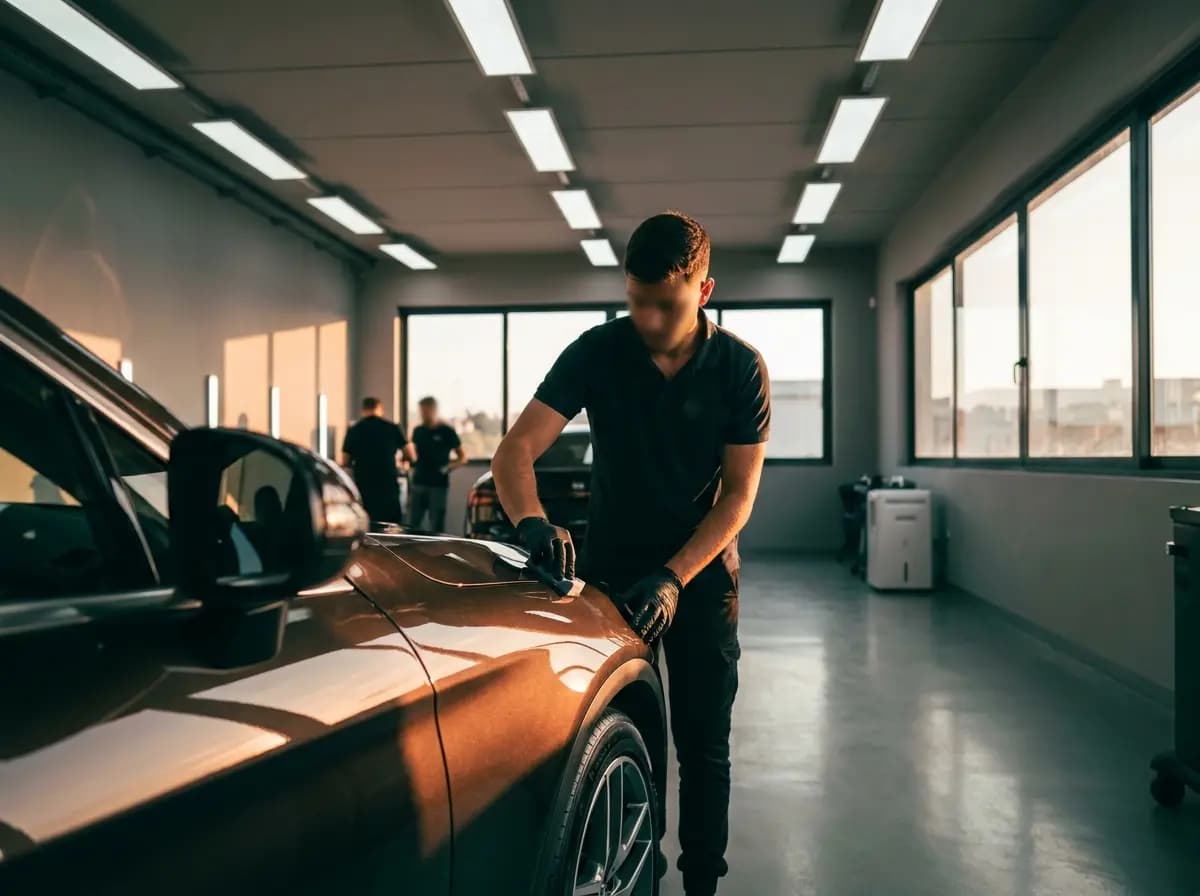
Correction and coating work keeps the car overnight, sometimes two nights, in a bay that has to stay free for it. That is not an appointment with an end time — it is the car in your care until it is handed back, and the bay unavailable for the duration. Base holds the bay across the whole job and keeps the car as being with you until somebody records the hand-back.

The drive is part of the job

A mobile interior clean forty minutes away costs the day two journeys. If the calendar only holds the working time, the detailer arrives late to the next one, every time. A mobile visit carries the travel on both ends as part of what it occupies, so the day that looks full is the day that is actually full.

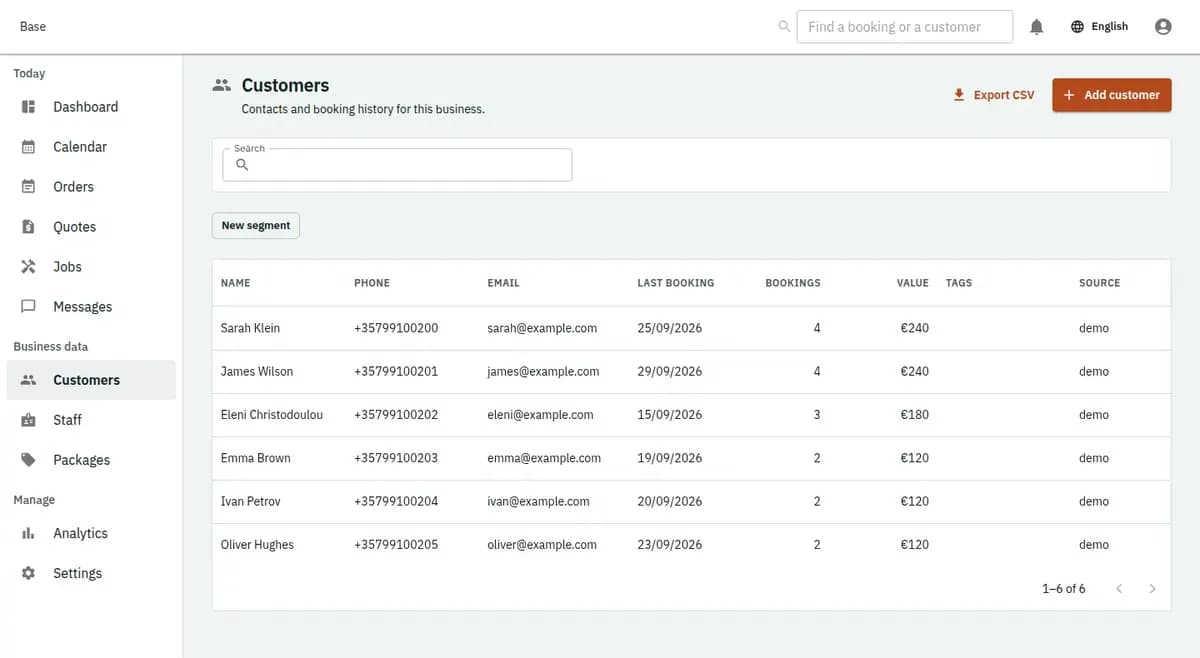
The booking console, with invented records: the customer list

Car wash booking system by bay, person and duration

A detailing booking has three limits at once, and a calendar that only tracks time will oversell all three.

Three constraints, one confirmation

The bay, the detailer and any shared machine are reserved together for the whole job. Confirmation fails as one action when any of them is taken, so there is no booking that has a free bay and no one to work in it. The refusal names which constraint failed, which is usually enough to fix the booking in one move.

Multi-day work occupies the days it needs

A coating booked for Thursday and Friday holds the bay across both, including the overnight. The car is in custody for the same period. This is why detailing is not a slot system: the thing being reserved is a space with a car in it, not an hour in a diary.

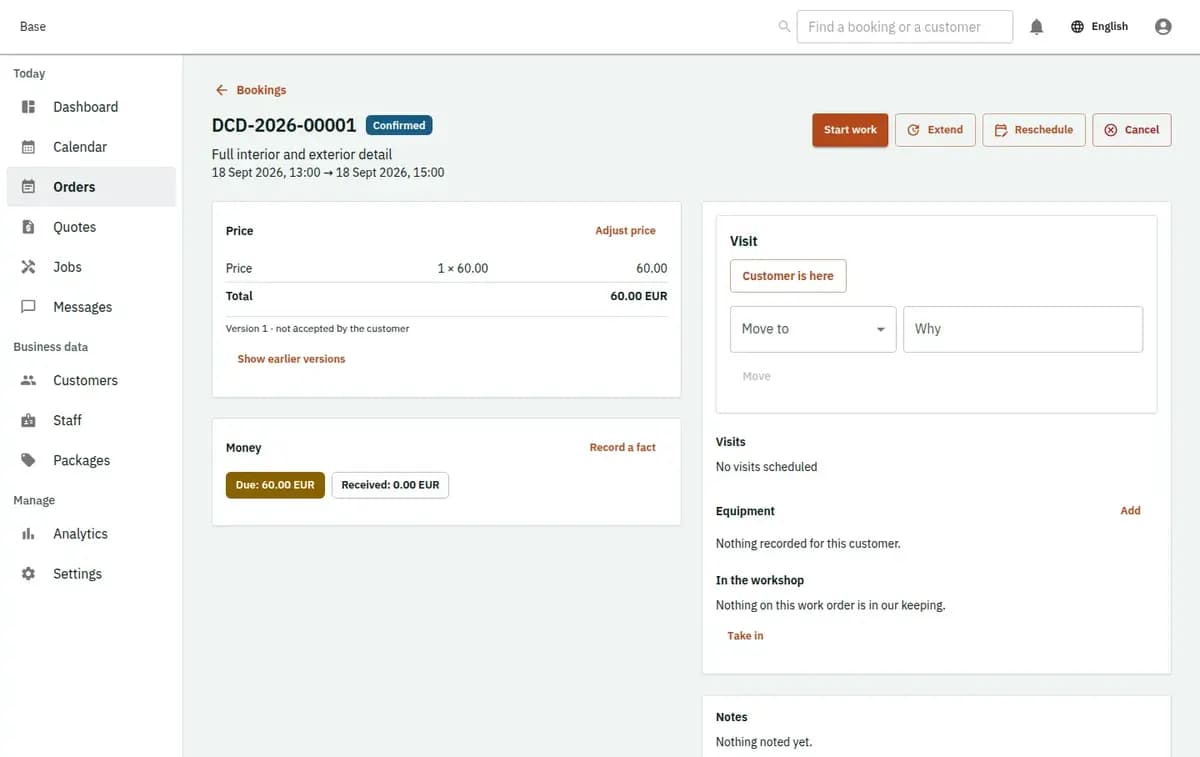
The booking console, with invented records: one booking with its price lines and history

Ordinary jobs, changed jobs and no-shows

One ordinary job, one that changes when the car arrives, and one that never made it into the bay.

A full interior on a Tuesday morning

Booked as a package, confirmed against the bay and the detailer for three hours. The car comes in, the condition is noted, the work is done and the car is handed back at midday. The bay is free for the afternoon booking that was made a week ago, because the morning did not quietly run over into it.

The paint is worse than the photos

The customer booked a one-stage polish; the detailer sees it needs two stages and another four hours. The revised quote goes on the record, the customer accepts or declines, and if they accept, the extra time is checked against the rest of the day before it is promised. If it does not fit, the honest answer is a second visit, and the record shows why.

The mobile job on the other side of town

A visit at eleven with forty minutes of driving each way occupies from twenty past ten to well past one. The detailer is not offered a bay job at half past twelve, because the calendar knows where they are. The one thing it cannot do is find parking or a power socket at the address, which is why the booking carries the site notes the detailer wrote last time.

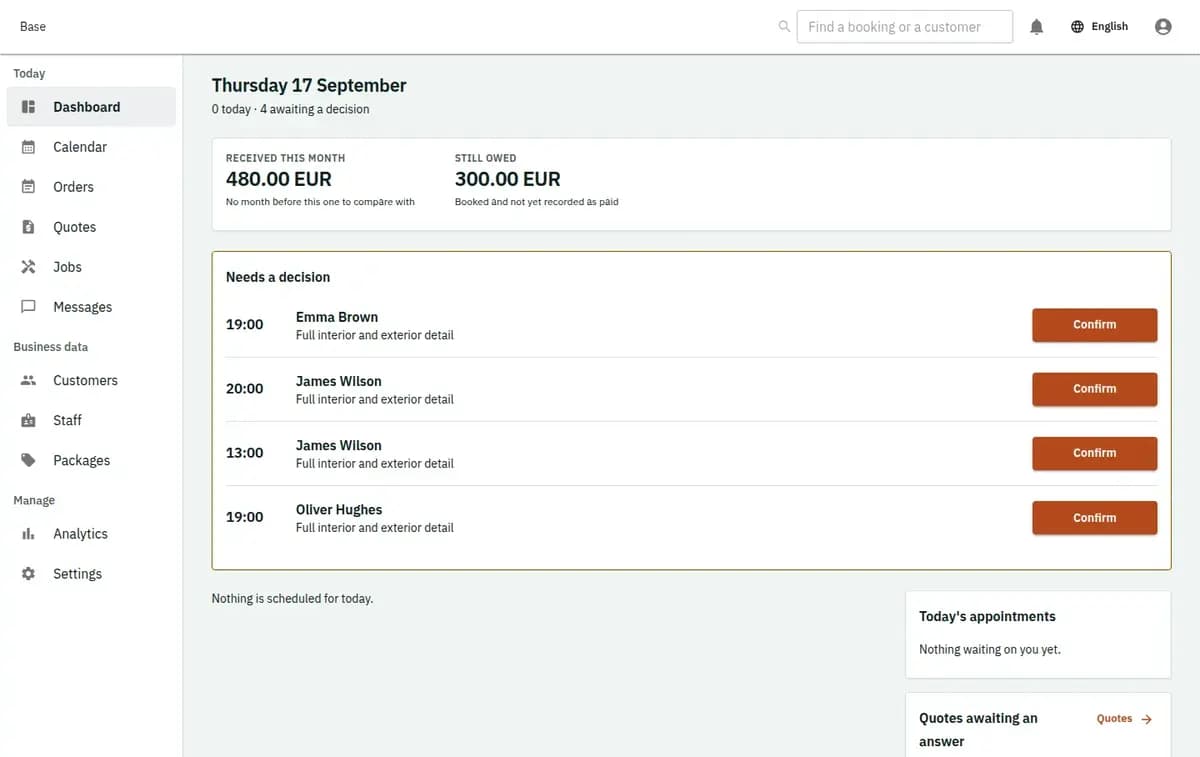
The booking console, with invented records: the day’s requests and money

Records that settle price and condition disputes

Two conversations recur in detailing: what the price became, and what the car looked like when it arrived.

The price has a history, not just a total

The package the customer chose, the quote the detailer wrote after seeing the car, the acceptance and the time it was given all stay on the booking. A later change does not overwrite the earlier agreement. That is what makes a hand-back conversation short: the number was agreed on Tuesday, and it is still there in the form it was agreed.

Condition notes belong to whoever wrote them

The kerbed wheel and the scratch on the boot lid are written at intake by the person who saw them, with the time. Base does not judge whether a mark was there before, does not assess damage and does not decide who pays. It keeps what was written when it was written, which is the only thing that helps a week later.

Bays, detailers and packages to enter first

Enter the bays you actually work in, the detailers and their real hours, and any machine there is only one of. Set your packages with durations you can hit on a bad car rather than a good one, and mark the services that keep the car overnight. Decide the travel time held around a mobile visit and whether a detailer can be booked at the unit on the same day. Write down what you record at intake — condition, valuables, fuel — and who may agree a revised quote. Then run a week of real jobs through it before you publish anything to customers: the durations you guessed are the ones you will change.

How detailing differs from neighbouring trades

Detailing sits next to several other trades, and the boundary matters most where the work overlaps.

When a different product is needed

Base does not do body repair, paint or panel work, does not hold a parts or consumables inventory, does not run a subscription wash with number-plate recognition, does not decide a warranty claim and does not process payment. It is not a marketplace and does not send you customers.

Not a body shop or a paint system

No panel repair, no paint jobs, no insurance work, no estimating from photographs and no parts ordering. If the car needs a bumper rather than a polish, that job lives somewhere else.

No stock, no subscriptions, no plate recognition

Base does not count your compound, does not reorder consumables, does not run a monthly wash membership and does not read number plates at a barrier. Those are different products with different economics.

A refusal is a valid result

A taken bay, a detailer already out on a mobile job, a machine in use, a car still in custody or an unaccepted revised quote will stop the next step. The previous state is untouched and the reason is plain, which is what lets you offer a real alternative instead of an optimistic yes.

Detailing questions

How much does Base cost for a small detailing business?

Base car detailing software has a Free plan at €0 with 2 staff accounts and 5 bookable items; Standard is €19 and Pro €39 a month per business. There is no commission and no card payment: customers pay you directly. Customers book from a page in English, Greek or Russian rather than a separate car detailing booking app, and you receive notifications by email or Telegram.

Can a job keep the car for two days?

Yes. A multi-day service holds the bay across the whole period and the car stays in custody until somebody records the hand-back. It is not an appointment with an end time that quietly passes.

How does a price change after seeing the car?

The package the customer booked stays on the record, and the detailer adds a quote once the car is in front of them. The revised price waits for the customer to accept it, and both versions remain visible with the time each was agreed.

Does a mobile visit account for driving?

Yes. Travel time is held on both ends of the visit, so the detailer is not offered a job at the unit while they are still on the road.

Can two detailers be booked in one bay?

Only if you have set it up that way. Bays, people and single-copy machines are separate constraints checked together, so the booking that would put two jobs in one bay is refused rather than confirmed and argued about later.

Does Base track products and consumables?

No. It books work and keeps custody of cars. Stock control is a different job and the profile does not pretend to do it.

What happens to a car nobody collects?

It stays visibly in custody on the record until the hand-back is entered. It does not vanish from the day’s view because its booking has ended, which is the reason a car can sit in a corner for three weeks unnoticed.

Next step

Open a workspace and set up one booking flow

Registration takes an email address. The operating model, services and resources are configured afterwards, in the console.