Field service scheduling

Garage management software for cars on site and work orders

  • Quote, job and visit with vehicle custody
  • Named workshop resources are exclusive
  • Custody controls final closure

No card asked for · nothing taken from a booking · your data exports

Operating model
Field service scheduling
What is booked
Service → Address → Team
Getting started
What to prepare before opening car service online booking

Base helps a small Cyprus garage follow a customer vehicle from the promised workshop slot through intake, diagnosis, an accepted quote, repair work and handback. The vehicle remains visibly in the workshop while it is in the garage’s custody. A work order cannot be closed before handback, and extra work becomes an accepted change rather than a silent edit to the owner’s agreed amount.

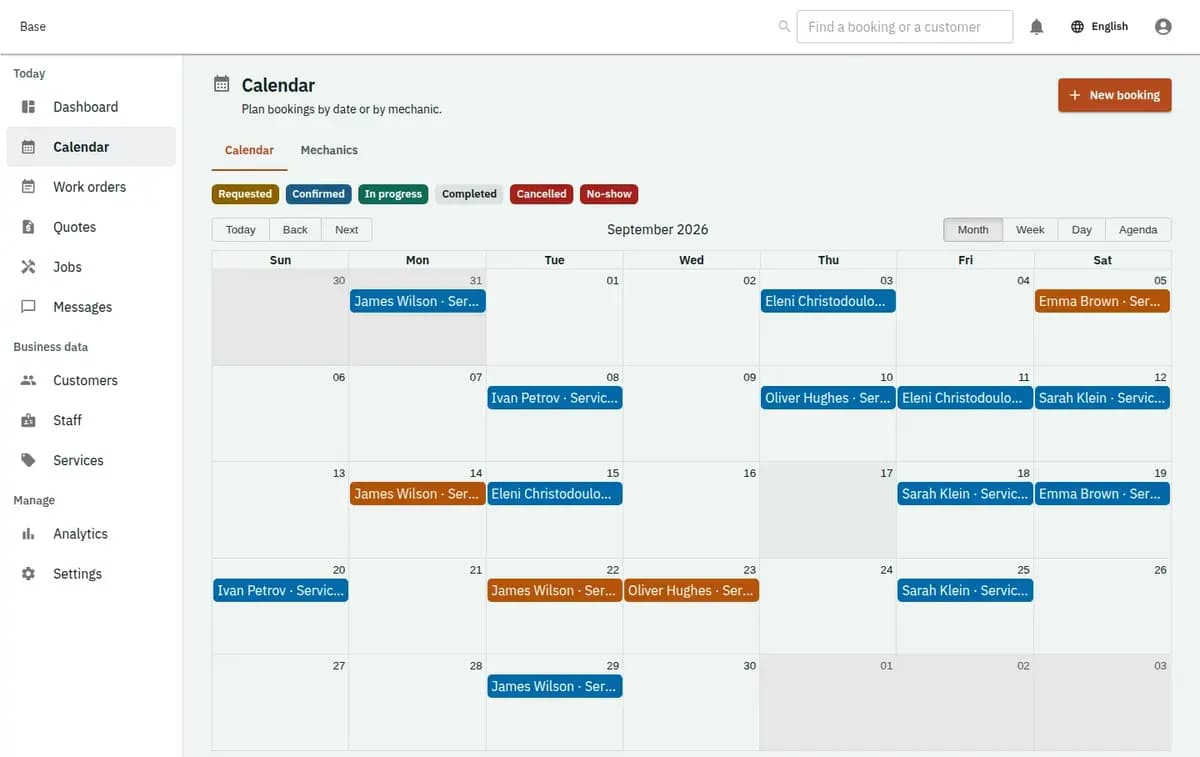
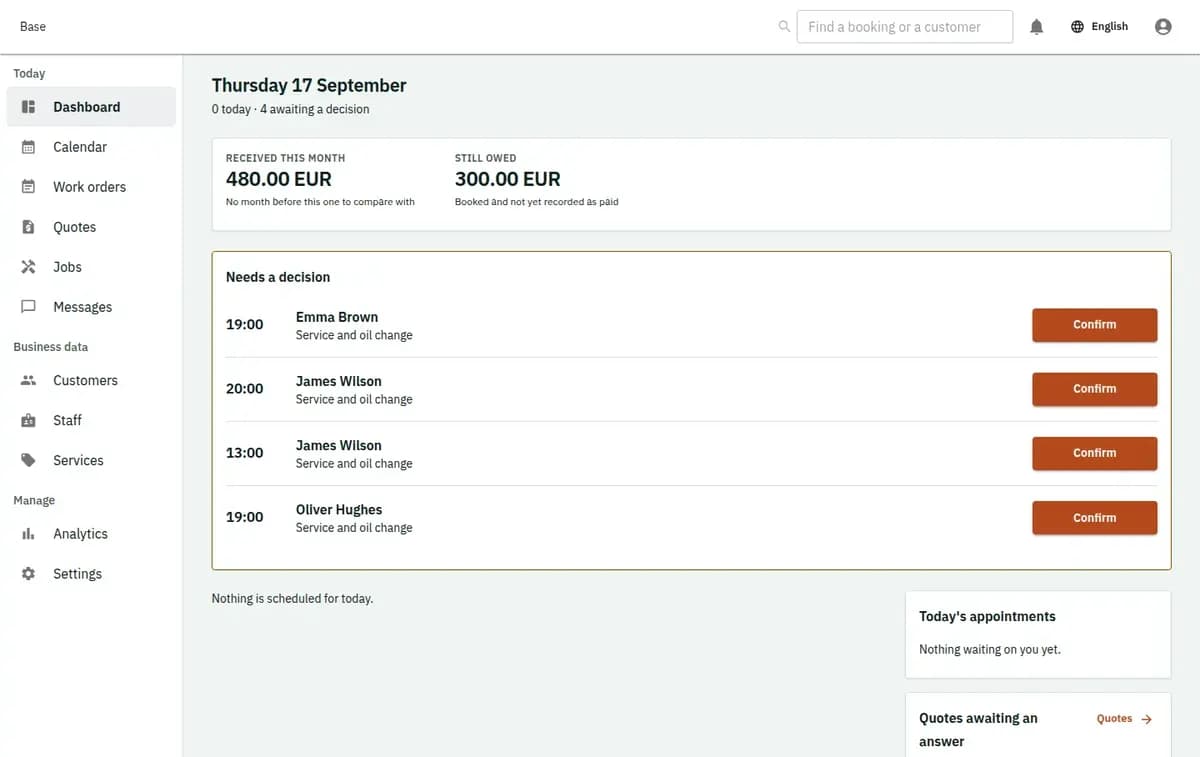
Base garage board showing vehicles on site accepted quotes jobs mechanics and workshop bays
A real console. The records in it are invented.

Auto repair shop software for independent garages

The profile fits a workshop with roughly one to ten bays that books arrival time before diagnosis, takes a customer’s vehicle into custody, prepares a versioned quote, performs one job across one or more visits and hands the vehicle back. It supports mechanics, lifts or bays, fitted-parts evidence and linked warranty return work.

How the garage booking system leads to a completed job

Quote, job and visit form one repair flow, with intake and handback protecting vehicle custody.

  1. 1. Book the arrival slot

    The counter records the customer, vehicle, requested service and arrival time, then allocates the required mechanic and lift or bay for that visit. All named people and equipment must be free together or the visit remains unscheduled.

  2. 2. Take the vehicle into custody

    At arrival, authorised staff record make, model and plate through the customer asset, intake time, odometer and the owner’s description of the issue. A vehicle already in the workshop cannot be taken in a second time.

  3. 3. Diagnose, quote and obtain acceptance

    The garage records a quote version with labour, supported parts and other labelled lines. The owner accepts that exact version outside any payment flow. An unaccepted quote cannot create authorised repair work, and later changes need a visible change order.

  4. 4. Run the job and visits

    An accepted quote becomes a job that can outlive one workshop visit. Staff schedule mechanics and equipment, record work and fitted-parts evidence, and link a warranty return where applicable. A collision leaves the visit unscheduled rather than partly reserving a bay.

  5. 5. Hand back before closing

    The counter records return time and outgoing odometer when the owner collects the vehicle. The job cannot close while intake still says the car is in the workshop. This guard keeps “work finished” separate from “custody ended”.

Workshop gaps between the diary and the car park

A useful garage record must join promised time, agreed work and physical custody.

The booking exists before the diagnosis

The counter can promise an arrival hour, mechanic and bay without pretending it already knows the repair. Intake and assessment then create the evidence for a quote. The original appointment remains the operational doorway, not a fabricated fixed repair package.

Nobody can answer which cars are still here

Vehicle intake records when the car arrived, its odometer and the owner’s description in their own words. The morning board can show vehicles on the lot, oldest first. Handback ends custody; marking work complete alone does not.

Extra work changes the agreed sum silently

Quote versions keep labour and other labelled lines. Acceptance snapshots the agreed version. When work on the lift reveals something else, staff issue a change order and obtain acceptance instead of overwriting the amount the owner approved.

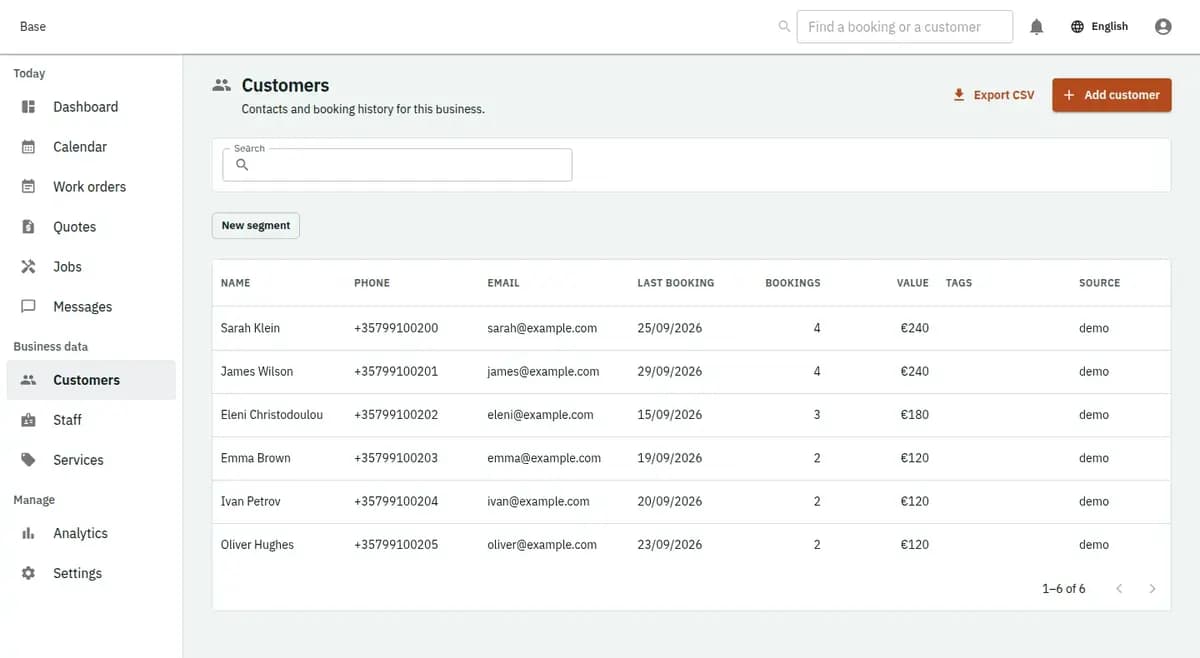
The booking console, with invented records: the customer list

Quote, job and visit with vehicle custody

The repair lifecycle and the physical possession of the customer’s car are related but distinct states.

Named workshop resources are exclusive

A visit reserves every required mechanic and lift or bay in one transaction, including active buffers. If one cannot be allocated, the complete visit is not scheduled. The bay uses the existing equipment resource rather than inventing a workshop-only type.

Custody controls final closure

Intake opens a custody record with arrival facts. Handback closes it with return facts, and the outgoing odometer cannot be lower than intake. A completed repair cannot close the job until the vehicle has actually left the workshop’s keeping.

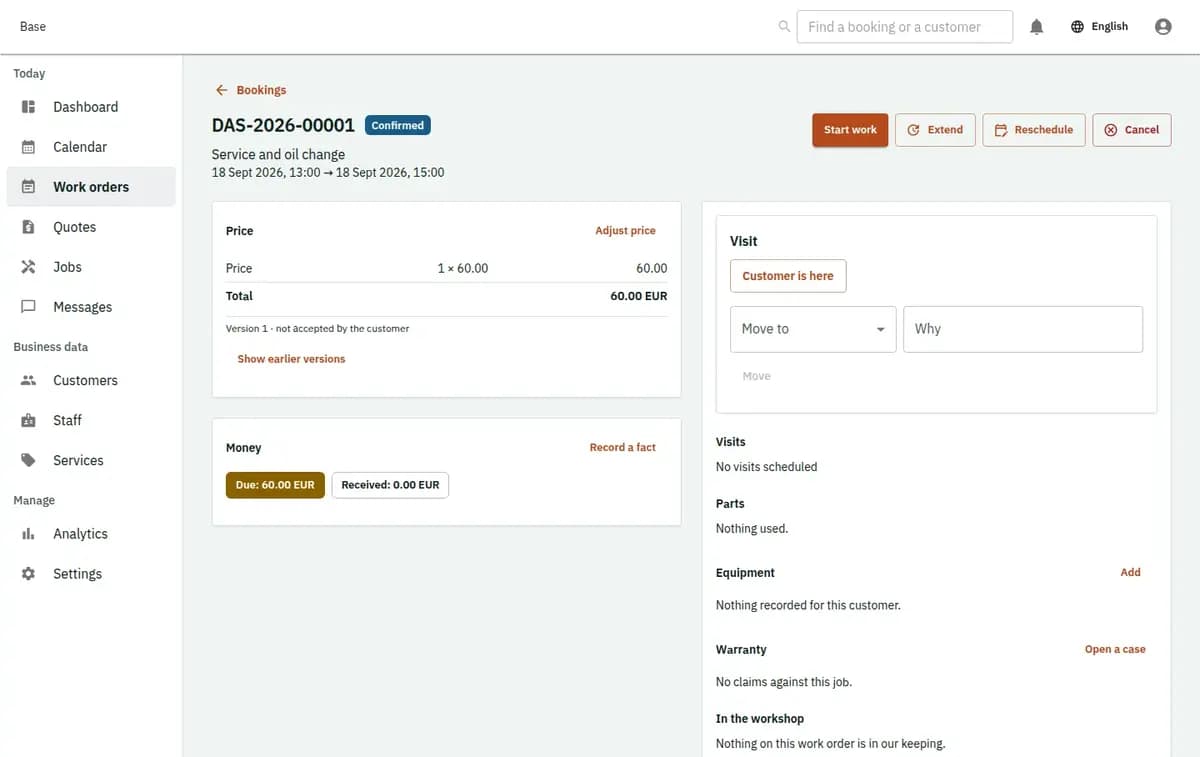
The booking console, with invented records: one booking with its price lines and history

Repairs and refusals in garage management software

The flow covers ordinary repair work and the refusals that prevent unauthorised or misleading closure.

A vehicle arrives for diagnosis

The booked lift and mechanic are ready. The counter records vehicle intake, odometer and the owner’s description. Diagnosis produces a quote, the owner accepts that version, and the workshop creates the job and records work before handback.

The owner has not accepted the quote

Staff have prepared an estimate, but no valid acceptance exists. Base refuses the transition into authorised job work. The team may issue a corrected version or wait for acceptance; it cannot treat an unanswered quote as permission.

Work is finished but the car remains on site

The mechanic marks the repair work complete, yet the vehicle has not been collected. Base keeps it on the workshop board and refuses final job closure. Only authorised handback with the return facts ends custody and allows closure.

The booking console, with invented records: the day’s requests and money

Workshop evidence without accounting or legal claims

The record supports the garage’s decisions while leaving money, liability and official certification outside the product.

Agreement and changes remain traceable

Quote versions, acceptance, change orders, visits, fitted-parts observations, warranty links, intake and handback retain actors and times. Later catalogue edits do not rewrite accepted work. Corrections preserve history instead of deleting an inconvenient version.

Customer vehicle data stays purposeful

Make, model, plate, odometer and the owner’s description support the repair and custody workflow. The garage controls staff access, privacy notices and retention. Base does not infer roadworthiness, establish fault or stamp an official service history.

What to prepare before opening car service online booking

Add real services with labour duration and price context, mechanics with working hours and skills, and lifts or bays as named equipment. Create customer vehicle records and configure intake, quote, job, visit, handback and warranty permissions. Add reviewed terms and privacy documents. Train the counter to record owner wording and odometer accurately, to obtain acceptance for every quote version and change order, and to hand back before final closure.

Garage limits and safe refusals

The profile manages repair work and custody without implying a full automotive ERP.
Workshop products outside this scope

Base is not a parts warehouse, tyre hotel, fleet-contract platform, roadside-recovery service, accounting system, payment processor or official service-book stamping authority. A workshop quote does not require the owner’s home address because the work happens at the garage. Customer money moves outside Base.

No parts warehouse or unrelated automotive products

Parts fitted can be recorded as job evidence, but Base does not run procurement, warehouse stock, tyre storage, fleet contracts, roadside recovery or official service-book stamping. Those need separate operational and legal scope.

No accounting or customer payment processing

Accepted quote lines and manual payment facts can remain visible, but Base does not take money, reconcile banks or run workshop accounting. The customer pays and receives refunds outside the platform.

Unaccepted work and premature closure are refused

A job cannot proceed from a quote the owner has not accepted. A visit cannot partially reserve a mechanic or bay, and a job cannot close while the vehicle remains in custody. Each failed action preserves the last valid state.

Garage questions

Can customers book a car service online?

Yes. Car service online booking runs from the garage’s booking page in English, Greek or Russian, and the request takes an arrival slot before diagnosis. This garage booking system then carries the vehicle through intake, an accepted quote, repair and handback. As auto repair shop software it takes no commission and no card payments; the customer pays the garage directly and staff record the payment.

Can the garage record vehicle intake and handback?

Yes. Intake records the vehicle, arrival, odometer and owner-reported issue. Handback records return facts and ends custody; a vehicle already on site cannot be taken in twice.

Can work begin before the customer accepts a quote?

No. The accepted quote version authorises the job. If the scope or amount changes, staff create a visible change order and obtain the required acceptance.

Are mechanics and bays scheduled together?

Yes. A visit reserves all required named staff and equipment in one action. If either conflicts, the visit remains unscheduled rather than creating a partial reservation.

Can a finished repair close while the car is still here?

No. Work completion and custody are separate. Final job closure is refused until authorised handback records that the customer vehicle has left the workshop.

Does Base manage parts stock or payments?

No. Fitted-parts evidence may be recorded, but warehouse management, accounting and payment processing are outside the profile. Customer money remains external.

Next step

Open a workspace and set up one booking flow

Registration takes an email address. The operating model, services and resources are configured afterwards, in the console.