Appointment booking

Dog grooming booking system for breeds, coats and drop-off days

  • Two limits a dog grooming booking system protects
  • The groomer and the table are checked together
  • A long-coat dog cannot be squeezed into a short slot

No card asked for · nothing taken from a booking · your data exports

Operating model
Appointment booking
What is booked
Service → Staff → Time
Getting started
Honest durations by size and coat first

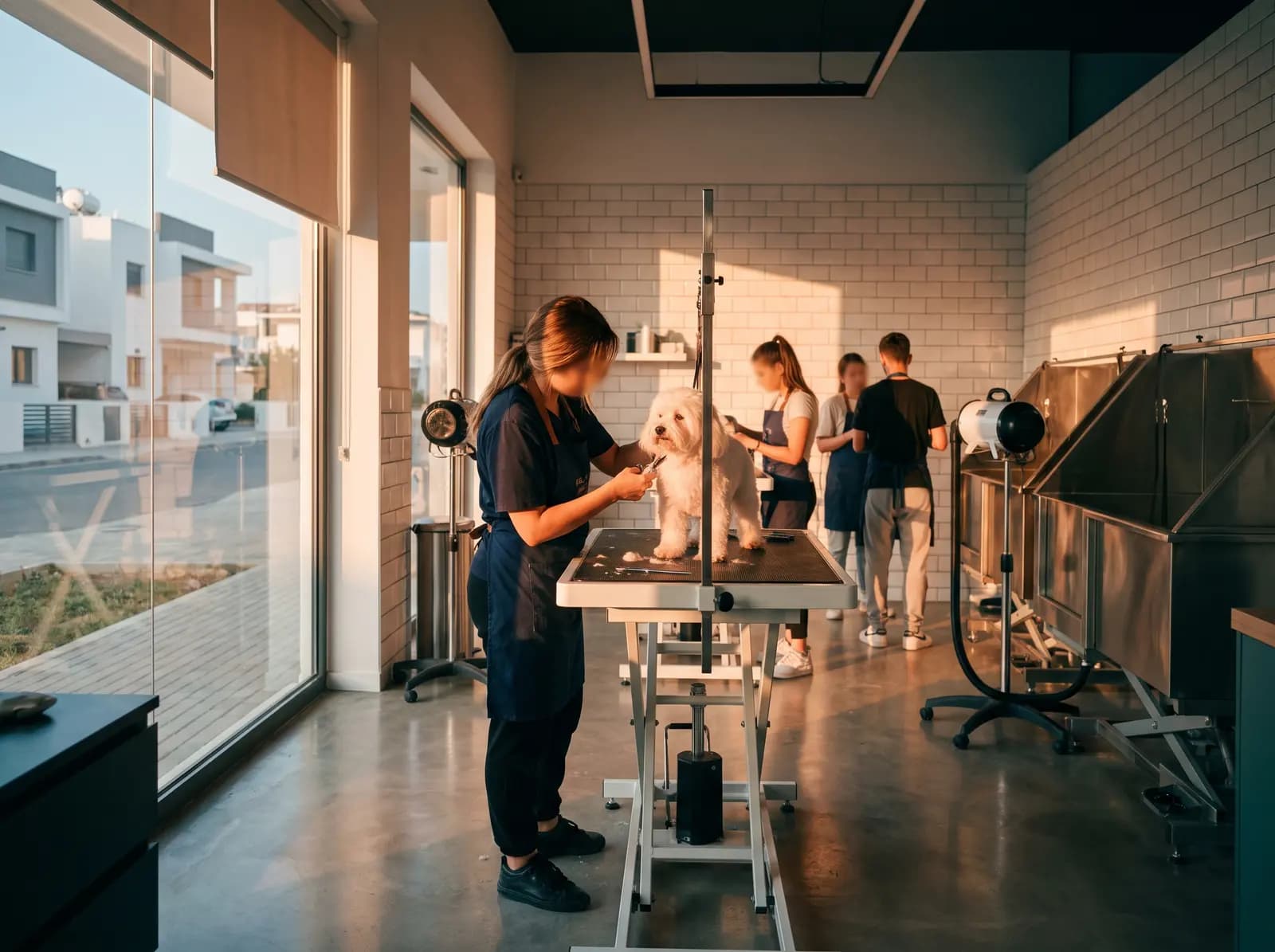
A full groom on a Yorkshire terrier and a full groom on a matted collie share a name and nothing else. One takes an hour, the other takes three and a half and the owner is told to collect at two. Base sets the length from the animal rather than the price list, treats the visit as a stay with a drop-off and a collection rather than a slot, and keeps the note from last time — the coat, the ears, the dog who only tolerates Elena — where the person booking will actually see it.

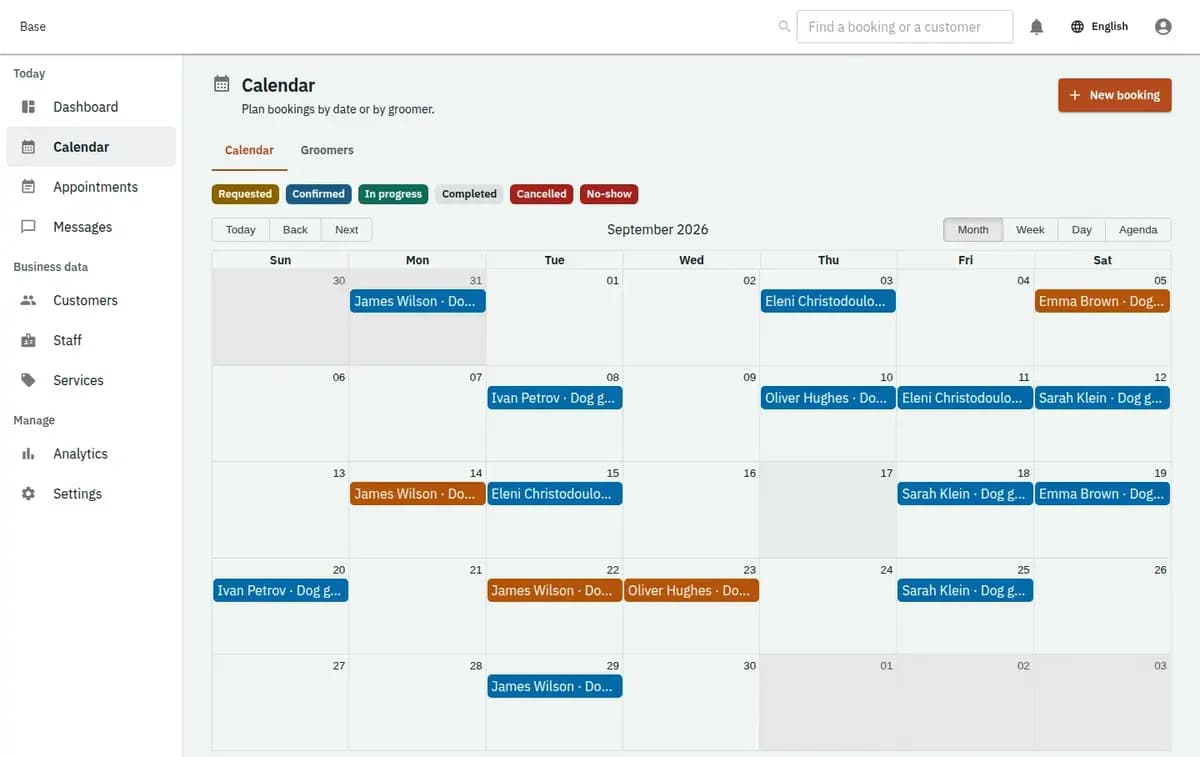
Base calendar showing grooming visits by groomer and table with drop-off and collection times
A real console. The records in it are invented.

Who this pet grooming software fits

It fits a salon with one groomer and a salon with four, a mobile groomer working from a van, and a shop where bathing happens at the back while clipping happens at the front. It is useful when the same service takes wildly different times depending on the animal, when owners drop off and come back, when a particular dog can only be handled by a particular person, when a household brings two or three animals in one visit, and when what went wrong last time is the single most useful thing to know before the next booking.

Online booking for dog grooming by size and coat

Set the salon up around animals rather than around service names, and the diary starts telling the truth.

  1. 1. Enter groomers and tables separately

    Each groomer goes in with their real hours and days. Bathing stations, tables and drying space are entered where they genuinely limit how many animals can be in the salon at once. A one-person salon may need no table at all; a four-chair shop needs every one of them.

  2. 2. Build services with durations that follow the animal

    Bath and blow-dry, full groom, de-shed, nails, a puppy’s first visit. Give each the times you really need for small, medium and large, and allow the long-coat version to be longer. Add the tidy-up gap between animals — the one that already exists and is never in the calendar.

  3. 3. Register the owner with each animal

    The household holds the owner’s contact; each animal sits under it with its name, breed, size and the note that matters: coat condition, ears, temperament, who it prefers. A family with two dogs is one household with two very different bookings.

  4. 4. Book the stay, not the slot

    The visit is confirmed with the groomer and, where you use them, the table, for the whole time the animal is in the building, and the owner is told a collection time that the calendar actually supports. Two animals from one household are booked together so they leave together.

  5. 5. Close the visit with a note for next time

    Finished, no-show, cancelled, or finished with something worth saying: the coat was badly matted and next time needs an extra hour, the dog would not tolerate the dryer. That note is what makes the next booking the right length instead of a repeat of today.

Why a grooming day never matches the price list

Three things, and every one of them ends with an owner waiting on the pavement.

The animal sets the duration, not the service name

A full groom is ninety minutes on one dog and three hours on another, and the difference is breed, size, coat and how badly the last few months went. A calendar with one duration per service either runs an hour late every afternoon or leaves gaps it never fills. Durations that follow the animal make the day predictable enough to promise a collection time.

A grooming visit is a stay, not an appointment

The dog arrives at nine, is bathed, dried, clipped and finished, and goes home at half past twelve. Drying is not the groomer standing over it the whole time, and the table it occupies is not free while it dries. A salon that books only the groomer discovers at eleven that three dogs need the same table, and one of them has to wait wet.

The same dog needs the same person

A nervous or difficult animal is groomed by the person it tolerates, and moving it to whoever is free costs an hour and a bite risk. Availability belongs to the groomer, and the animal record carries the note that says why. Without it, the booking is made by whoever answers the phone and the problem is discovered by whoever opens the crate.

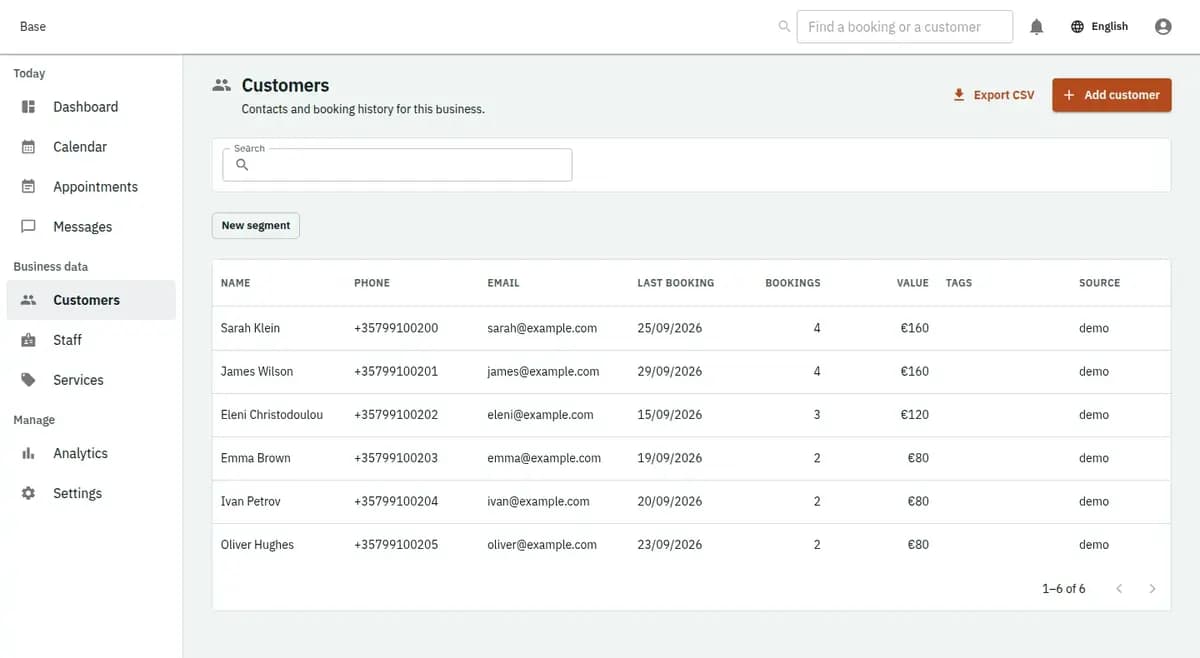
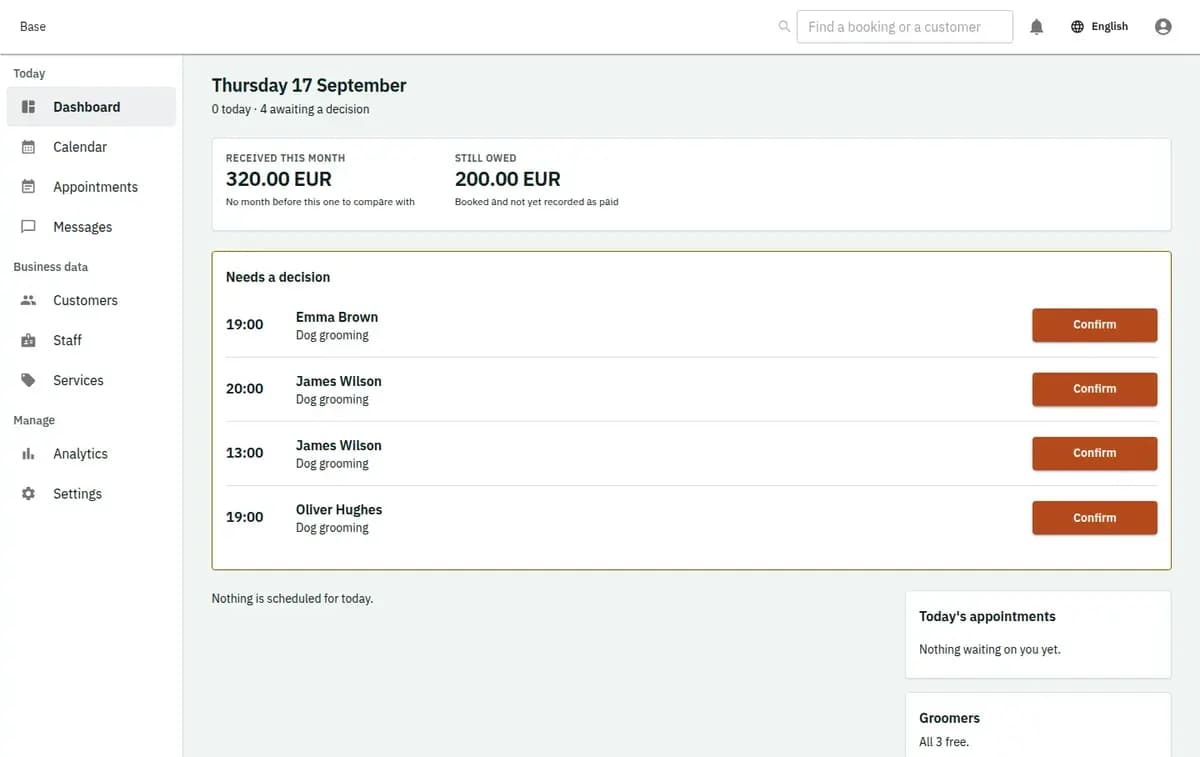
The booking console, with invented records: the customer list

Two limits a dog grooming booking system protects

Two constraints, and salons lose afternoons to both.

The groomer and the table are checked together

A visit holds the person for the part that needs them and the table for as long as the animal occupies it, with the tidy-up gap after. If either is taken, the booking is refused and the reason names which one — so the desk can offer the next hour that genuinely exists rather than the next empty-looking square.

A long-coat dog cannot be squeezed into a short slot

Because the duration comes from the animal and its service, a three-hour groom will not fit into a ninety-minute gap and is not offered there. That single refusal is what keeps the collection time you promised at nine still true at half past twelve.

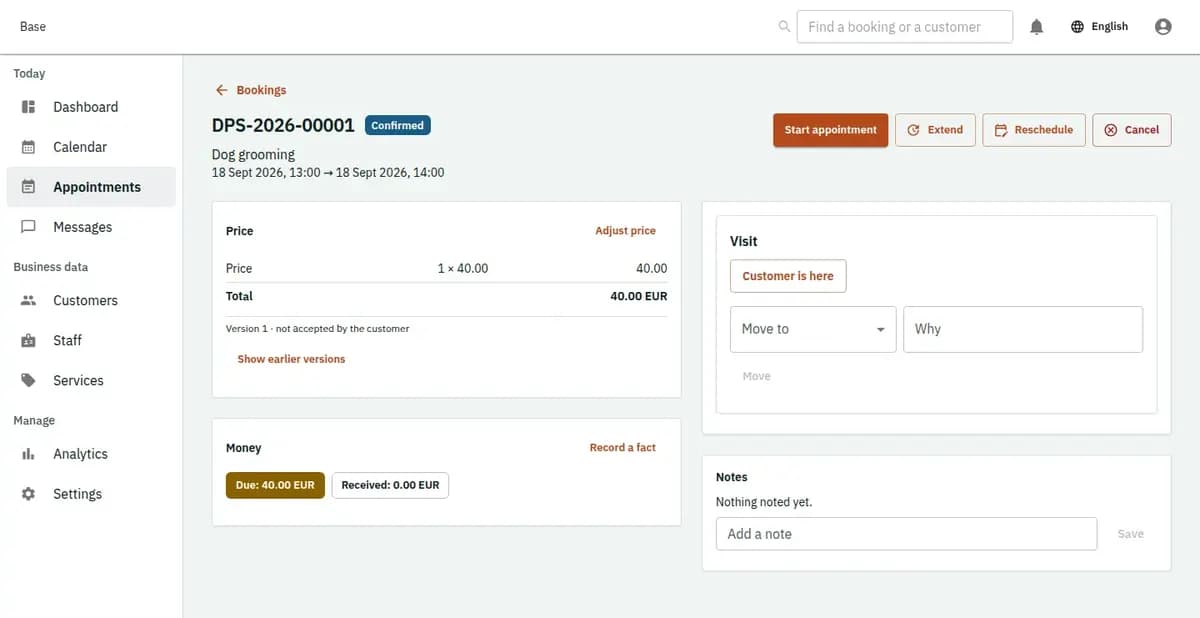
The booking console, with invented records: one booking with its price lines and history

Matted coats, two-dog households and nervous dogs

A matted collie, a household with two dogs and a nervous spaniel.

The collie that took an extra hour

Last visit ran long because the coat was matted, and the note said so. This time the booking is made at the longer duration from the start, the owner is given a collection time at two instead of at noon, and the afternoon does not slide by an hour for everybody who comes after.

One household, two dogs, one trip

A small terrier and a large retriever are booked into the same morning with two different durations, on two groomers or one after the other. The owner makes one journey and collects both, and the salon sees a household rather than two unrelated names that happen to share a phone number.

The spaniel that only tolerates Elena

The animal record says who handles this dog. The booking goes to Elena’s availability, and when she is away the salon knows to offer a different week rather than a different person. What used to be a difficult morning becomes a scheduling decision made in advance.

The booking console, with invented records: the day’s requests and money

Medical questions stay with the vet

Animals bring medical questions with them, and a grooming diary must not start answering them.

Not a veterinary record

Base keeps the animal’s name, breed, size, the owner, the visits and short operational notes about handling and coat. It does not hold diagnoses, treatments, medication or clinical history, and a note that a groomer saw something on the skin is a reason to tell the owner to see a vet — not a medical record and not a finding.

Vaccination status is what you recorded, not what we checked

If your salon asks for proof, staff record what they saw and when. Base can carry that note and show it at the next booking. It does not verify a document, does not contact a vet or an authority, and does not enforce a rule on your behalf: refusing an animal remains a decision your team makes.

Honest durations by size and coat first

Write down the honest durations for your services by size and coat, including the version that takes twice as long, because the whole day depends on those numbers. Decide whether tables and bathing stations are a real constraint for you or whether the groomer is the only one. Enter each groomer with their hours and note who handles difficult animals. Set the tidy-up gap between animals to the length it really is. Decide your cancellation and no-show rule and who may cancel. Then enter your regular clients with their animals and their notes before you go live — the notes are worth more than the bookings, and they are the part nobody can reconstruct later.

Where grooming ends and vets, retail and boarding begin

A salon touches veterinary work, retail and boarding without being any of them.
When a different product is needed

Base is not a veterinary system: no clinical records, no diagnoses, no prescriptions, no treatment decisions. It does not run boarding or day care, does not enforce vaccination rules, does not sell products or manage retail stock, and does not process money. It schedules groomers, tables and animals, and hands the rest to the people and the systems that own it.

Not veterinary care

No diagnoses, no prescriptions, no treatment, no clinical notes. If an animal needs a vet, the salon says so to the owner; Base neither records that as a medical event nor pretends to know what it means.

Not boarding, day care or retail

Overnight stays, day care capacity and product sales are different products with different rules. A grooming visit is a stay measured in hours on a specific day, and stretching it into boarding would misrepresent what the calendar can promise.

A refusal is a valid result

A groomer already working, every table occupied, or a three-hour groom that will not fit before closing stops the booking. The previous state stands, the reason is plain, and the owner is offered a time that will still be true when they arrive.

Pet grooming questions

Can owners book a groom online, and in which languages?

Yes. Online booking for dog grooming runs from your own booking page in English, Greek or Russian, and the length of the visit comes from the animal’s size and coat rather than from the price list. As pet grooming software, Base sends booking notifications by email or Telegram and syncs both ways with Google and Microsoft calendars. Owners pay the salon directly, and Base takes no commission.

Can durations differ by breed and size?

Yes, and they should. Each service carries the times you really need for small, medium, large and long-coat animals, so a three-hour groom is never offered in a ninety-minute gap.

How are drop-off and collection handled?

The visit is booked for the whole time the animal is in the salon, including drying, so the collection time you give the owner is one the calendar can actually support.

Can a dog be tied to one groomer?

Availability belongs to each groomer, and the animal record carries the note about who handles it. When that person is away, the salon offers another week rather than another pair of hands.

Can one owner book two animals in a visit?

Yes. The household holds the owner and each animal sits under it, so two dogs with different durations can be booked into one trip and collected together.

Does Base check vaccination records?

No. Staff record what they were shown and Base can carry that note forward. It does not verify documents, does not contact a vet and does not refuse an animal on your behalf.

Are grooming notes clinical records?

No. They are short operational notes about coat, handling and what to allow more time for. Anything medical belongs to a veterinary practice and its own records.

Next step

Open a workspace and set up one booking flow

Registration takes an email address. The operating model, services and resources are configured afterwards, in the console.