Rental management

Bike rental software for pooled sizes and e-bikes

  • Bicycle rental software that allocates by size and quantity
  • Capacity cannot be oversold
  • Assignment does not rewrite the promise

No card asked for · nothing taken from a booking · your data exports

Operating model
Rental management
What is booked
Item → From / To → Return
Getting started
What to prepare in e-bike rental software

Base helps bike shops and hotel rental desks answer a practical question: how many suitable bikes or e-bikes remain for a category, size and period? The profile allocates quantity from a stock pool rather than requiring a serialised bicycle at confirmation. Staff may assign an eligible unit later at issue, record accessories and battery observations, and handle explicit substitutions or split returns without silently changing the customer promise.

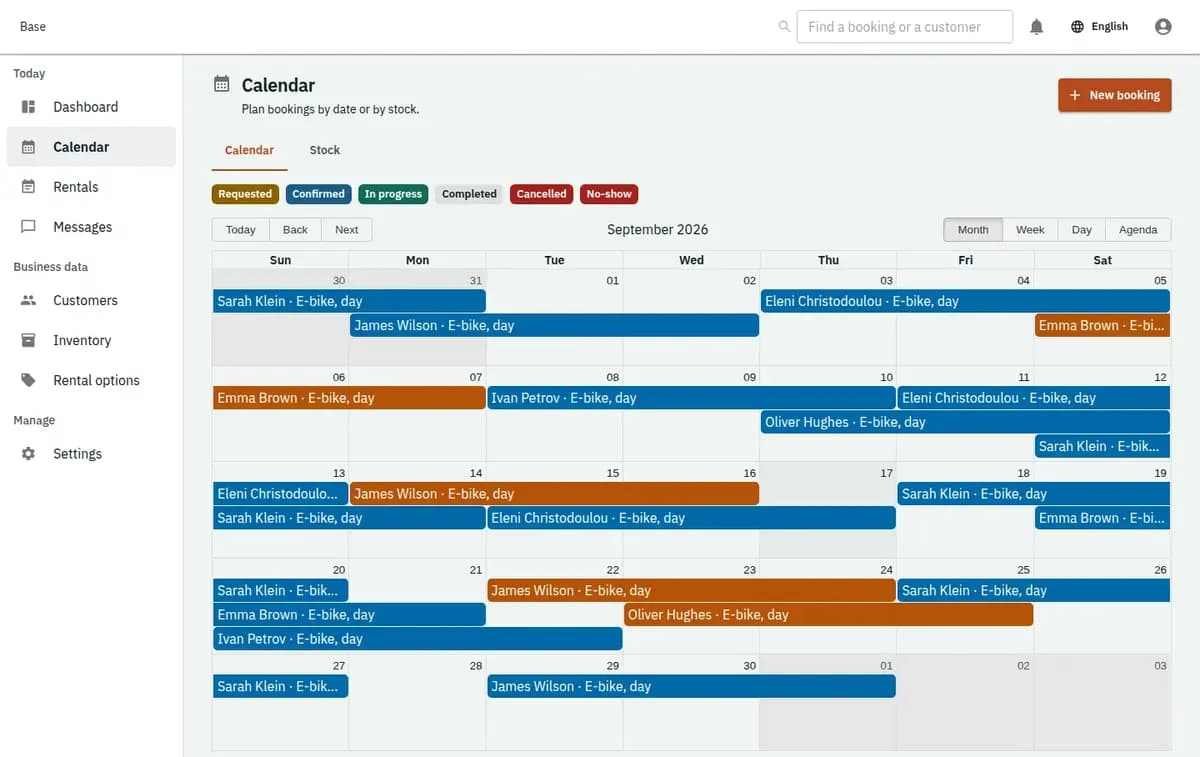
Base bike rental inventory showing pooled categories, sizes and available quantities
A real console. The records in it are invented.

Rental desks suited to pooled bike inventory

This profile fits operators selling availability by bike type, e-bike type, category, size and quantity. It works when individual frames may be assigned at issue rather than booking, and when staff need to track capacity, accessories, condition and battery observations. It supports an explicit substitute decision and returning part of an issued quantity while remaining items stay in use.

How the bike rental booking system books and fulfils

Quantity allocation owns the promise; optional unit assignment supports fulfilment without replacing the pool contract.

  1. 1. Build category and size pools

    Create bike and e-bike pools with explicit category, size, serviceable capacity and period rules. Add offerings, rates, accessories, schedules, maintenance blocks and reviewed policies. Optional serial or frame records are used only when that released capability is configured.

  2. 2. Receive a quantity request

    The customer chooses category, size, quantity and dates, plus supported accessories. Verification creates a request for review. Displayed availability comes from compatible allocatable capacity, not a count of every bicycle in the business.

  3. 3. Allocate the pool atomically

    Confirmation locks the relevant pool and period and consumes quantity only when enough capacity remains. Price and policy snapshots stay with the booking. Concurrent requests cannot push allocations above capacity; one attempt is refused when stock is insufficient.

  4. 4. Assign and issue equipment

    At fulfilment, staff may assign serviceable units from the allocated pool without consuming another booking’s quantity. They record issue actor, time, accessories, condition and relevant battery observations. A substitution is explicit rather than an unnoticed edit.

  5. 5. Record full or split return

    Staff return units or quantity with time, condition, accessory and battery observations. A partial return leaves outstanding quantity in use and preserves history. External deposit, refund, loss or damage money facts are recorded only after they happen outside Base.

Problems caused by counting the wrong bikes

A pool protects requested attributes and quantity across the period even when a frame number is chosen later.

The sheet shows bikes, not allocatable bikes

Total stock misleads when units are allocated, under service or unsuitable for category and size. Base evaluates the matching pool and active date allocations. Confirmation consumes required quantity atomically without claiming an unrelated bicycle can satisfy the booking.

Substitution loses customer context

A different size or category is not a silent stock adjustment. A substitute decision is explicit and must preserve or improve agreed eligibility, with changed price requiring acceptance. Staff see why the original pool was unavailable and what attributes were offered instead.

Issue and return lose quantity detail

Handover retains issued quantity, optional assigned units, helmets or locks, condition and e-bike battery observations. A split return records what came back and what remains out. Damage or loss observations do not delete allocation history or automatically establish liability.

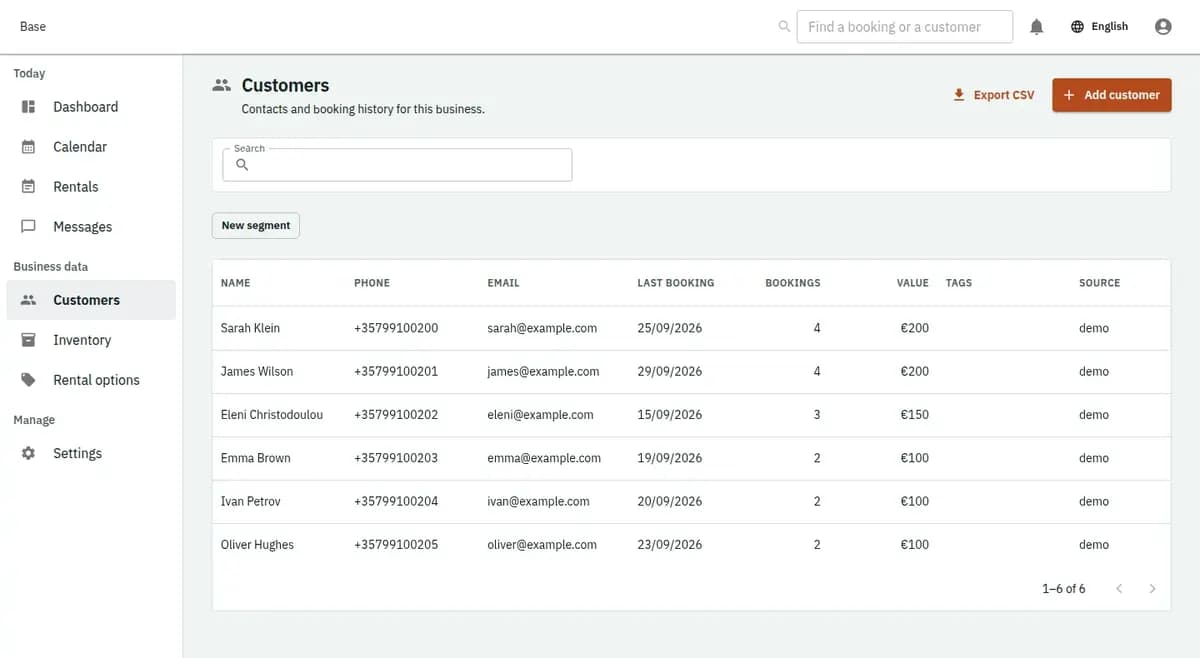
The booking console, with invented records: the customer list

Bicycle rental software that allocates by size and quantity

Unlike car rental, this profile promises compatible capacity first and may identify a particular unit later.

Capacity cannot be oversold

The ledger protects each compatible pool over the requested period. Active allocations never exceed serviceable capacity, even under concurrent requests. Maintenance reduces available stock, and assignment cannot borrow quantity already promised to another booking.

Assignment does not rewrite the promise

An optional serialised bicycle or battery may be chosen at issue from allocated attributes. If the original pool cannot fulfil, staff use an explicit substitute decision and preserve eligibility and price acceptance. Silent replacement across size or e-bike category is forbidden.

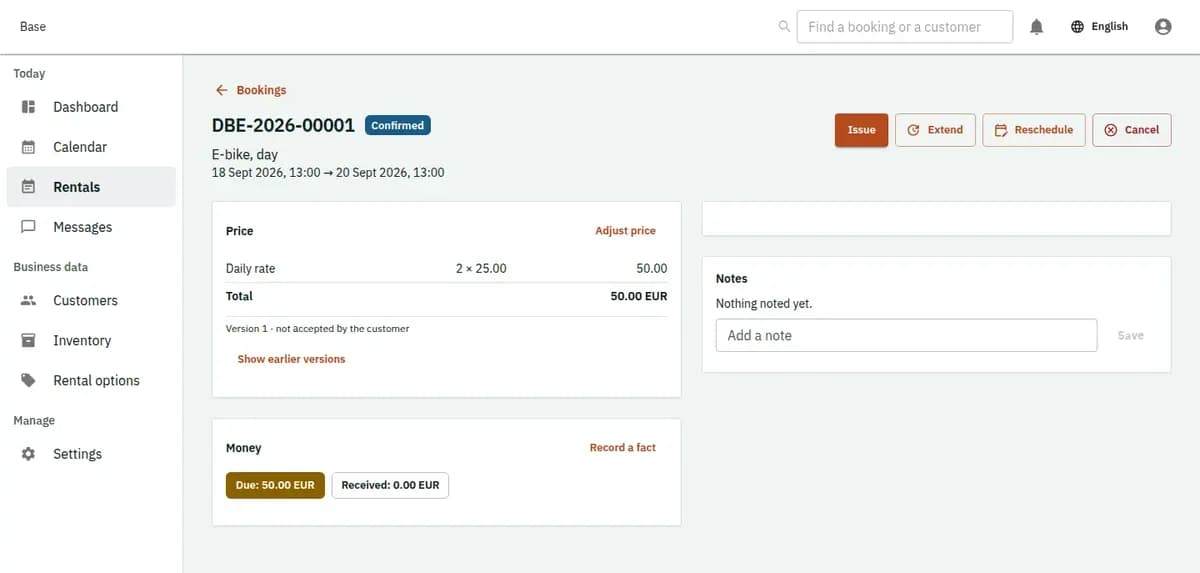
The booking console, with invented records: one booking with its price lines and history

Family groups, oversells and split returns

The pool model covers family quantities, an oversell refusal and visible split returns.

A family reserves sizes

A customer requests two adult bikes and one child bike in specified sizes. Base allocates quantity from matching pools. At issue, staff select serviceable units, attach helmets and record condition. The booking remains tied to promised attributes although frame numbers were unnecessary at confirmation.

Requests exceed the remaining pool

Only two medium e-bikes remain and two customers each request two. The first valid confirmation consumes capacity. The second is refused without partial quantity, so staff can offer another category, time or explicit substitute instead of overselling.

One bike returns early

A group returns one bike while two remain in use. Staff record a split return with unit or quantity, time, condition and accessories. Base releases only the returned portion and keeps the rest active, preserving a trail for final return.

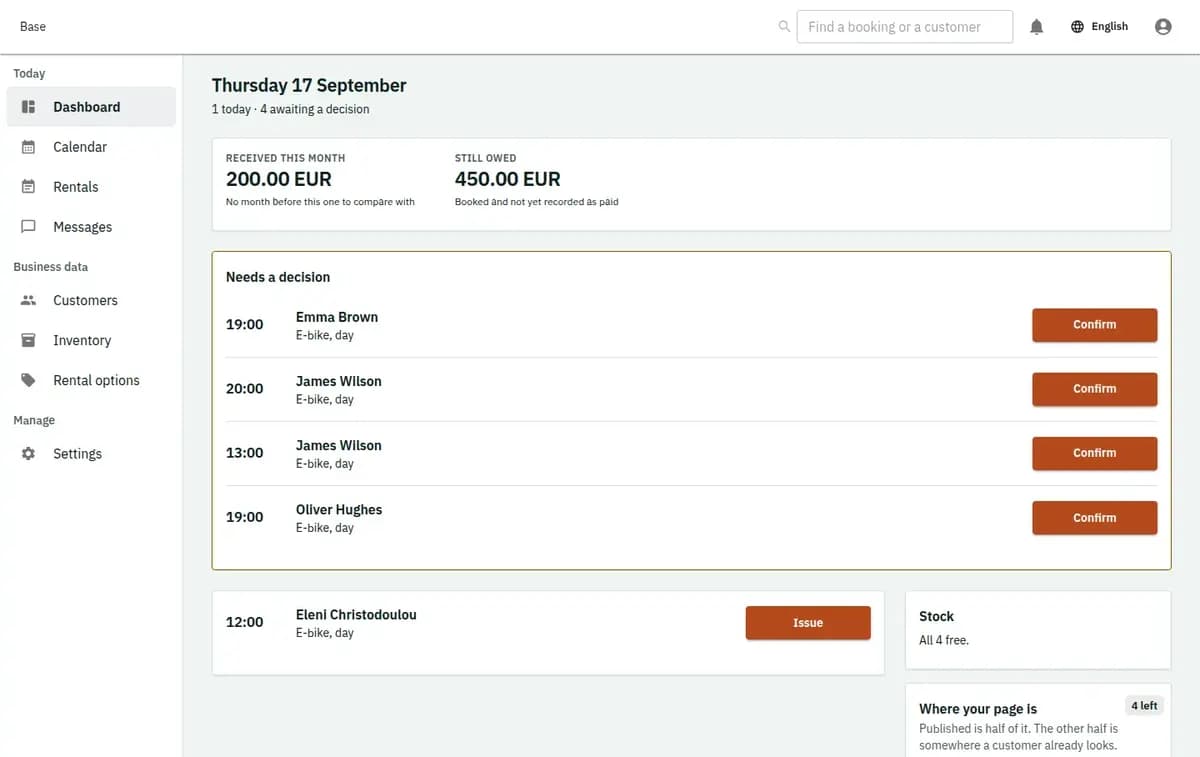
The booking console, with invented records: the day’s requests and money

Operational evidence without mobility overclaims

The inventory record explains allocation and handover without claiming connected-bike or liability automation.

Stock changes stay explicit

Pool capacity, allocations, optional unit assignments, substitutes, issue and return observations connect to actors and times. Import validates capacity against current allocations, and historical assignments are not collapsed when inventory configuration changes.

Condition is an observation

Staff may record visible condition, accessory return and battery charge or health observations. These facts support operations but do not decide responsibility, a deposit charge or technical safety. The business owns policies, inspection decisions and retention.

What to prepare in e-bike rental software

List real stock pools by type, category and size, with serviceable capacity and periods. Add offerings, duration rules, prices, accessories, maintenance blocks, substitution policy and reviewed rental, cancellation and privacy terms. Decide whether released serialised tracking is needed; do not invent frame records when pooled quantity is enough. Import pools and active allocations through preview that rejects capacity conflicts, then train staff on explicit issue, substitute and split return.

Bike rental limits and refusals

The profile protects stock and fulfilment without implying a connected public mobility system.

Bike mobility products outside the profile

Base is not a public dock network, IoT lock platform, navigation or live tracking service, delivery marketplace or consumer mobility network. Optional serial-unit, scanning or delivery behaviour is not promised unless released. End-customer payment occurs outside Base; the profile records operational facts only.

No dock, unlock or tracking network

Base does not operate public docks, connected locks, live GPS, navigation or a consumer marketplace. Scanning and delivery are absent unless their capability is released and configured.

No customer payment processing

Rates and deposits appear in accepted snapshots, while actual customer funds stay outside Base. Staff may record payment, refund or deposit facts, but the product does not run checkout, payouts or bank reconciliation.

Insufficient compatible stock is refused

If category, size and quantity are unavailable for the full period, confirmation fails without a partial promise. Staff may offer an eligible substitute or another time; they cannot silently consume another pool or booking’s assignment.

Bike rental questions

How do staff hear about a new bike request?

Each new request from your booking page reaches staff by email or Telegram, and the e-bike rental software shows it in the same list as bookings staff enter themselves. Staff then confirm a quantity from the stock pool for that category, size and period. Base does not send SMS, and the bike rental booking system takes no commission on any rental.

Must we assign a frame number at booking?

No. The primary model allocates quantity from a compatible category and size pool. With released serial tracking, staff can assign a serviceable unit at issue without changing the quantity promise.

Can Base prevent pooled stock overselling?

Yes. Confirmation atomically allocates quantity for the pool and dates. Concurrent requests cannot exceed capacity; an attempt above the remainder is refused without partial allocation.

How are substitutions handled?

A substitution is an explicit decision preserving or improving eligibility. Changes to category, size or accepted price are not silent; the revised offer and any needed acceptance remain visible.

Can staff record a partial return?

Yes. A split return records returned unit or quantity, time, condition and accessories while the rest remains allocated. Final return closes the remainder without deleting the earlier trail.

Does Base unlock bikes or collect payment?

No. IoT locks, public docks, live tracking, consumer mobility and customer checkout are outside this profile. Payments happen outside Base, with factual external events recorded when useful.

Next step

Open a workspace and set up one booking flow

Registration takes an email address. The operating model, services and resources are configured afterwards, in the console.